 Listen to our podcast: SEEDS AND THEIR PEOPLE!




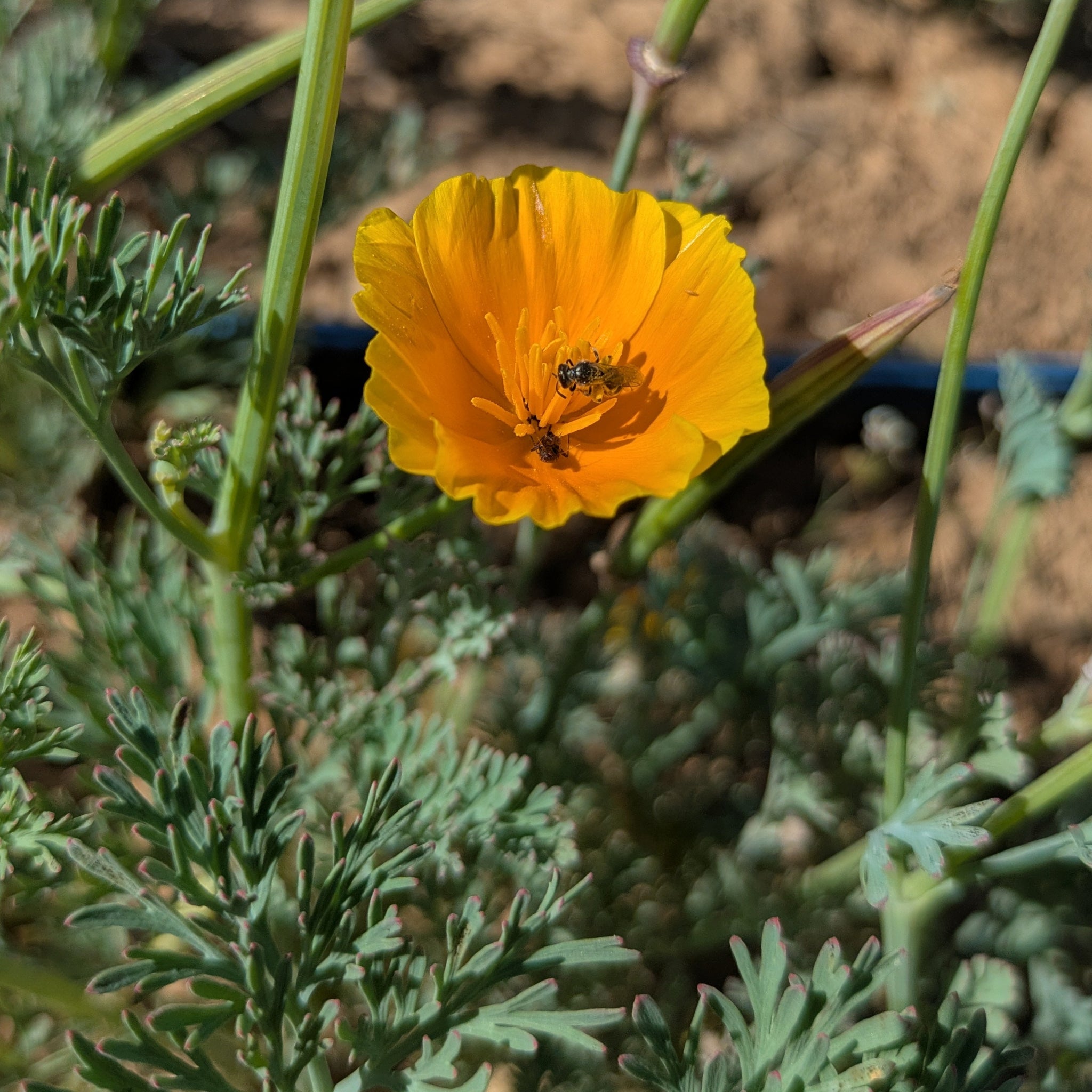


California Poppy
Eschscholzia californica
The iconic California poppy is a hardy and easy-to-grow wildflower that can make itself at home in any garden. These plants grow 1-2’ tall and have distinct feathery, blue-green foliage that make them easy to distinguish from other plants.
In their native range along the Western coast of North America (Washington, Oregon, California, Nevada, Arizona, New Mexico, Sonora and northwest Baja California) they are a spring and early summer flower, but will bloom through the summer in cooler areas. In addition to their bright blooms, they are also grown for their medicinal properties.
Also called: Mexican poppy, California Sunlight, Copa de Oro (Cup of Gold) and Qupé, in Chumash.
(Photos by David Vigil and Owen Taylor)
Days to maturity: 60-90
Seeds per pack: 110
Germination rate: 79% on 01/29/2026
Planting / harvesting notes
In milder climates, poppies are best seeded in the fall or late winter for early spring blooms. In cooler areas, plant in late/winter or early spring. Seeds can be broadcast and lightly raked to encourage soil contact–plant no more than ¼” deep. Transplanting is not recommended.
Poppies require cool nights to flower abundantly, so they grow best early or late in the year. They often flower for long periods and can be perennial in milder climates.
Seed keeping notes
Seed pods should be collected when the pods are firm and pull easily from the plant. Poppies tend to ripen in succession, so check your plants on a regular basis. If you leave the pods to fully dry on the plants they will fling their seeds far and wide as they dry!
To finish curing your pods, place them in a paper bag and seal with a clothespin – keep them in a dry place and listen as they pop like popcorn in the bag. When the pods have fully dried they are easy to separate from the seed.


